Orthodontic Marketing: How to Reach Parents and Adults Looking for Braces and Clear Aligners
Ahmed Naguib
Quick answer: Orthodontic marketing has two audiences: parents deciding for a child or teenager, and adults who want straighter teeth, often discreetly with clear aligners. Speak to each one separately, with its own ads, page and first reply. Lead with a clear assessment offer, explain the length and stages of treatment honestly, offer payment plans if you have them, and track how many consultations turn into treatment starts.
Orthodontic treatment is long, it costs a meaningful amount, and the person who pays is often not the person who wears the braces. That makes it a different marketing problem from a filling or a cleaning. A parent is asking whether it's the right time and whether their child will cope. An adult is asking whether it will be noticeable at work, how long it takes, and whether aligners will really work for them.
This guide covers both audiences: what each one wants, how to set a budget, what your orthodontic page needs, how to run Meta and Google ads within the platforms' rules, reply templates for the questions you'll get every day, the consultation, follow-up, and how to find the step where patients are dropping out.
Two audiences, two different decisions
| Parents (child or teen treatment) | Adults (often clear aligners) | |
|---|---|---|
| Main question | Does my child need it, and is now the right time? | Will it be noticeable, and how long will it take? |
| Main worries | Discomfort, school, cooperation, total cost | Appearance at work, speech, discipline with wear time, cost |
| Who decides | One or both parents, sometimes with the teen | The adult, sometimes with a partner |
| Best offer | An orthodontic assessment that tells them if and when treatment is needed | An aligner consultation, ideally with a digital scan and a preview of the plan |
| Content that works | When to have a first check, what happens at each stage, caring for braces | Aligners versus fixed braces, a day in the life, honest answers about wear time |
Run them as separate campaigns. A single ad that says "braces for all ages" speaks clearly to no one. Build a persona card for each with the free Dental Patient Persona Maker.
Timing for parents: the first check
Many parents assume orthodontics starts when all the adult teeth are in. Professional bodies such as the American Association of Orthodontists recommend a first orthodontic check by around age 7, not because most children start treatment then, but because some problems are easier to manage early. This is one of the most useful messages you can give parents: an early check is about knowing, not about starting treatment. Check the guidance of your own national orthodontic society and use its wording where you can.
Budget: start from the value of a treatment start
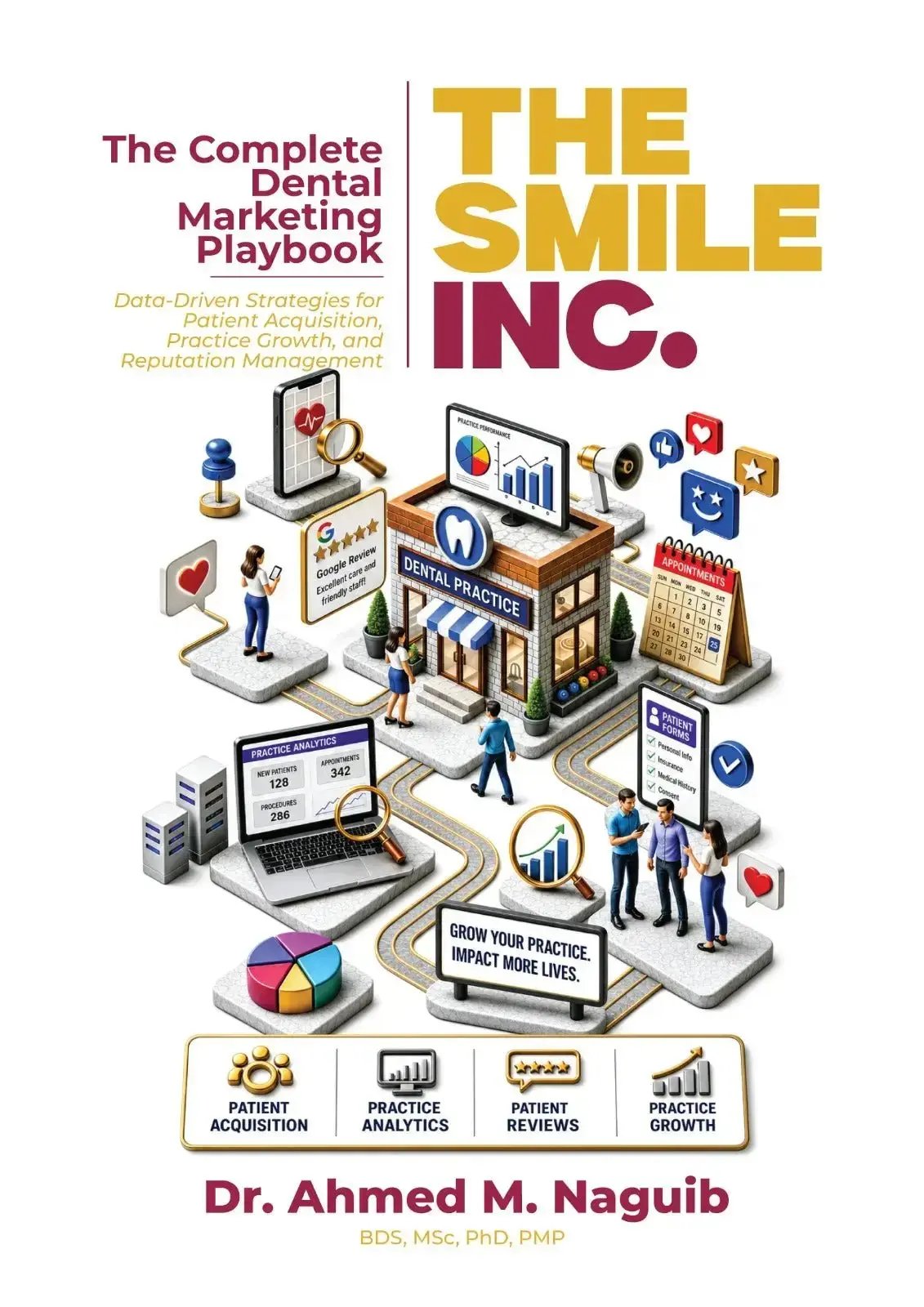
As with any high-value treatment, decide the most you can spend to win a patient before you run ads. The framework in The Complete Dental Marketing Playbook uses 8 to 12% of the patient's lifetime value as a guideline for the maximum acquisition cost.
A hypothetical example, for illustration only: say an orthodontic case at a clinic is worth 2,000 in local currency, so the maximum acquisition cost is 160 to 240. A campaign spends 1,200 and brings 120 conversations, of which 30 book an assessment, 22 attend and 6 start treatment. The cost per treatment start is 200, inside the limit. A cost of 10 per message tells you very little on its own. Put your own numbers into the free Dental Ad Cost per Patient Calculator.
Your orthodontic page: what it must include
- Separate sections for children and adults, or separate pages, so each visitor finds their situation quickly.
- The options you offer, such as metal braces, ceramic braces and clear aligners, with honest pros and limits for each.
- Typical treatment length, given as a range, with a note that the assessment decides the real figure.
- What the price includes: records and X-rays, the appliance, adjustment visits, retainers after treatment.
- Payment plans, if you offer them. Monthly payments matter a lot in orthodontics.
- Retention: explain that retainers are part of treatment, so the result lasts.
- The orthodontist or dentist, with qualifications stated accurately.
- Real cases, shared with written consent, and from a parent or guardian for minors.
- Reviews, or a link to your Google reviews.
- A clear booking or WhatsApp button, with address, map and hours.
Check your site with the free Dental Website Grader.
Meta ads for orthodontics: stay within the rules
Target parents, not teenagers. Since early 2023, Meta only lets advertisers use age and location to reach people under 18. Interest and behaviour targeting isn't available for that age group. The cleaner approach is to aim parent campaigns at adults, with the parent as the reader of the copy, for example "Is it time for your child's first orthodontic check?"
Avoid personal-attribute wording. Meta's Advertising Standards don't allow copy that asserts or implies the viewer has a health condition or a particular physical trait. Compare:
| Risky wording | Safer wording |
|---|---|
| Embarrassed by your crooked teeth? | Clear aligners: how they work and who they suit |
| Does your child have a bad bite? | When should children have their first orthodontic check? |
| Perfect smile in 3 months, guaranteed | Book an aligner consultation to see your treatment plan and timeline |
Before-and-after images: following Meta's July 2026 Health and Wellness update, published summaries say before-and-after images for general cosmetic procedures are allowed when the ad targets people 18 and over, while content that plays on insecurities or harms body image is still not allowed. Policies change, so check the official standards first. Never use images of a minor without the written consent of a parent or guardian.
A good setup for most clinics: the Engagement objective with WhatsApp or Messenger as the destination, a location matched to where your patients come from, and one clear offer per campaign.
Google Ads for orthodontics
- Keywords: "braces" plus your city, "orthodontist near me", "clear aligners cost", "invisible braces", "braces for adults". If you use a brand name such as Invisalign in your ads, follow the brand owner's rules and Google's trademark policy.
- Negative keywords: DIY, at-home kits if you don't offer them, jobs, course, school, free.
- Location option: choose "Presence: People in or regularly in your targeted locations" so you don't pay for clicks from people far away who are only interested.
- Landing page: send aligner searches to the adult or aligner section, and child searches to the parent section, not to the homepage.
Reply templates for the questions you'll get every day
How much are braces?
Thanks for your message. Treatment at our clinic starts from [amount], depending on the type of appliance and how long treatment takes. The assessment, which costs [amount] and includes [X-rays/scan], tells you exactly which option suits you and the full cost. We also offer [payment plan]. Would [day] at [time] or [day] at [time] suit you better?
A parent asking if their child needs braces:
Thank you for getting in touch. An assessment is the best way to know, and it doesn't mean treatment has to start now. Sometimes the right answer is to wait and check again later. The orthodontist will explain what they see and the best timing. Which day works for you and your child?
An adult asking about clear aligners:
Good question. Clear aligners suit many cases, but not every case, and the consultation will tell you honestly whether they're right for you. They need to be worn for most of the day to work. At the consultation we'll explain the expected timeline and cost. Shall I book you in for [day] at [time]?
"It's too expensive":
I understand, it's a real commitment. Our price includes [items, including retainers]. We also offer [payment plan], which spreads the cost across treatment. You're welcome to come for the assessment and decide with all the information.
Save these as quick replies in WhatsApp Business, or create your own with the free WhatsApp Reply Generator.
The consultation and follow-up
For parents, invite both parents if possible, and speak to the child directly too. Children who understand what will happen cooperate better. For adults, show the plan visually if you can, and be honest about wear time and the need for retainers. In both cases, hand over a written plan with the options, timeline, total cost and payment schedule, because orthodontic decisions are usually made at home.
| When | Follow-up message |
|---|---|
| Same day | Thanks for coming, plus a digital copy of the plan |
| 2–3 days later | Any questions from you or your family? |
| About 10 days later | A helpful video or article, such as what the first week with braces is like |
| About 3 weeks later | A final, polite note that the plan is still available |
For parents, school holidays are a natural moment to start treatment, so a seasonal reminder before the holidays works well. See Seasonal Campaigns for Dental Clinics.
Content ideas that build trust
- "When should my child have their first orthodontic check?" answered by the orthodontist on camera.
- Braces or aligners? An honest comparison.
- A week in the life of an aligner wearer, from a real patient with consent.
- What to eat, and avoid, with braces.
- Why retainers matter after treatment.
- A finished case with photos at each stage, with written consent.
For more ideas, use the free Dental Post Ideas Generator.
What to avoid
- Guaranteed timelines such as "straight teeth in 3 months". Treatment length depends on the case.
- Implying aligners suit everyone. They don't, and patients who discover this at the consultation feel misled.
- Hiding the cost of retainers or extra aligners until later.
- Using photos of children without written guardian consent.
- Calling a general dentist an orthodontist if they aren't one. Check your dental board's or regulator's rules on titles and advertising.
Find the leak
| What you see | Likely cause | What to do |
|---|---|---|
| Few enquiries | Mixed audience or weak offer | Split parent and adult campaigns, with one clear offer each |
| Many enquiries, few assessments | The first reply | Faster replies, a price range and two appointment options |
| Assessments booked, poor attendance | No reminder | Confirmation plus a reminder the day before. See the No-Show Cost Calculator |
| Good attendance, few starts | Cost shock or no follow-up | A written plan, payment options and the follow-up schedule |
Frequently asked questions
Should I advertise aligners and braces in the same campaign?
No. The audiences, worries and offers are different. Separate campaigns give clearer messages and clearer results.
Can I target teenagers directly?
Meta only allows age and location for people under 18, and in most cases the parent is the one who decides and pays. Aim your copy at parents.
Should the price be in the ad?
A starting price or a monthly payment figure can attract serious enquiries, as long as it's real and you say the final cost depends on the assessment. Advertising the assessment price is often simpler and more honest.
How long before an orthodontic campaign shows results?
Decisions often take weeks, especially for parents. Judge campaigns on treatment starts over a month or two, not messages in the first week.
Can you help set this up?
Yes. Start with the Clinic Marketing Audit and I'll review your ads, your orthodontic page and how your team answers enquiries.
Want the ads run for you?
With Facebook Leads, your Facebook and Instagram ads are managed for you, patients are routed to your WhatsApp or booking form, and you get a monthly cost-per-booking report.
Sources: Meta Advertising Standards (Health and wellness; Privacy violations and personal attributes); Meta's January 2023 update on ad targeting for teens; American Association of Orthodontists guidance on a first check by age 7; Google Ads Help (About advanced location options). The numbers in this article are hypothetical examples, and platform policies may change after publication.
Dr Ahmed M. Naguib is a dentist and Meta-certified marketer who founded The Smile Inc. to help dental clinics get more patients. See how we can work together.
Keep reading
- Dental Implant Marketing: How to Attract Implant Patients and Turn Enquiries into Treatment Plans
- WhatsApp for Dental Clinics: 10 Reply Templates That Turn Messages into Appointments
- Dental Patient Personas: How to Know Exactly Who Your Marketing Is For
- تسويق تقويم الأسنان (Arabic version)